Home Fire Protection: Detectors, Extinguishers and More
By Karen Whitfield · Published · Updated · 7 min read
Most home fire deaths happen in homes without working smoke alarms, and the gap between a working alarm and a dead one is usually a battery or a date. This guide walks through the equipment that actually buys you time: detection, extinguishers, escape tools, and the simple maintenance schedule that keeps all of it ready.
Everything here assumes a mountain cabin as easily as a suburban house. Cold winters, wood heat, and seasonal vacancy make some of these checks more important, not less, so we've noted where altitude, temperature, and time-empty change the routine.
Start With Detection, Not Extinguishers
Detection is the first layer because it works while you are asleep, and roughly half of home fire deaths occur overnight. Install smoke alarms on every level of the home, inside each bedroom, and outside each sleeping area. In a cabin with a loft, treat the loft as a sleeping area and protect the stairwell, since smoke rises fast through an open stair.
Choose interconnected alarms so one sounding unit triggers all of them; a fire in a basement utility room should be audible in a second-floor bedroom with the door closed. Battery-only units are fine where wiring is impractical, but sealed 10-year battery models remove the most common failure: a missing battery borrowed for something else.
Carbon monoxide alarms belong in any home with gas appliances, a wood stove, or an attached garage. Place them near sleeping areas and on each level, following the manufacturer's mounting height, since CO mixes with air rather than rising like smoke. Test both alarm types monthly with the test button and vacuum the sensing chamber yearly.
For placement specifics in steep-roofed and lofted buildings, see smoke detector placement rules for cabins and A-frames, which covers dead air spaces near peak ceilings where smoke may never reach a ceiling-mounted alarm.
- Smoke alarms: every level, every bedroom, outside sleeping areas
- Interconnected units so all sound together
- CO alarms near sleeping areas and above attached garages
- Test monthly, vacuum yearly, replace per manufacturer
Choosing and Placing Fire Extinguishers
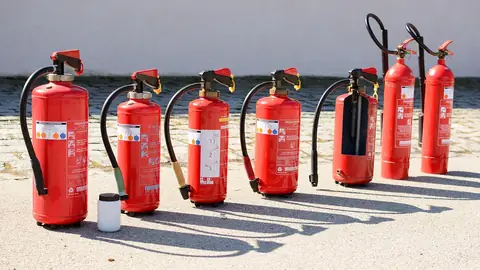
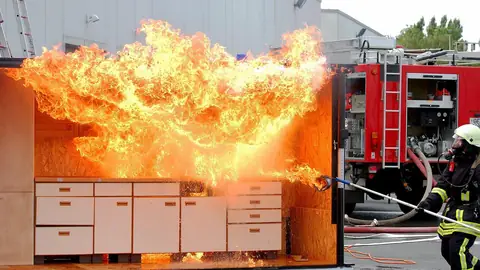
A home extinguisher should be rated for the fires you are likely to have. An ABC dry-chemical unit covers trash, wood, and energized electrical equipment and is the sensible default for kitchens, garages, and wood-stove areas. Kitchens with cooking oil risk benefit from a small K-rated extinguisher or a wet-chemical unit, since a standard ABC can splash burning grease.
Size matters more than people expect. A 5-pound ABC extinguisher discharges in roughly 8 to 15 seconds; a 2.5-pound unit half that. Keep one on each level and one within reach of the kitchen exit, mounted 3 to 5 feet off the floor where it is visible and not behind a curtain or in a closet under the sink.
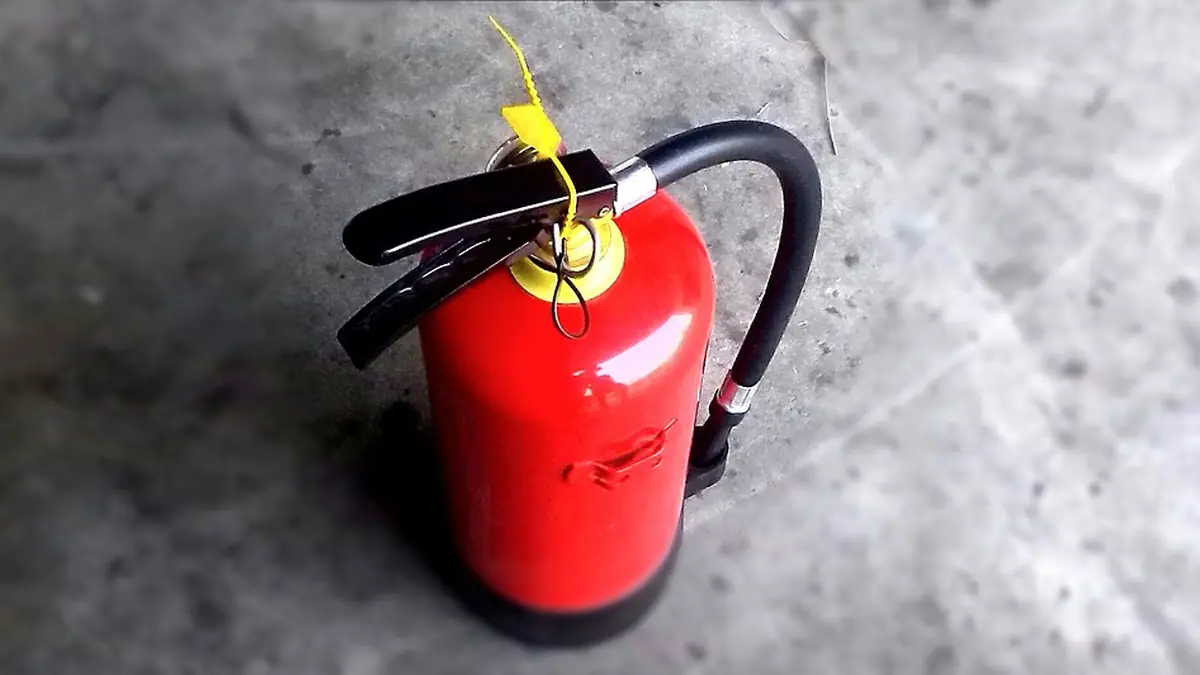
Extinguishers are for small, contained fires and a clear exit behind you. If the fire is taller than you, spreading, or producing heavy smoke, leave and call for help. Monthly, check that the gauge needle sits in the green zone and the pin and seal are intact; shake dry-chemical units a few times a year to keep the powder loose.
The technique is simple and worth rehearsing once: pull the pin, aim at the base of the fire, squeeze the handle, sweep side to side. Our walkthrough of how to use a fire extinguisher in four steps covers stance, distance, and when to abandon the attempt.
- ABC dry chemical for general household use
- K-rated or wet chemical for kitchen oil fires
- Mount near an exit, 3 to 5 feet high, never behind doors
- Check the gauge monthly; replace or service per the label
Escape Tools and the Two-Ways-Out Rule
Equipment supports escape; it does not replace it. Every sleeping room needs two ways out, usually a door and a window. In second-floor or loft bedrooms, a listed escape ladder stored under the bed or beside the window turns a single-exit room into a survivable one, provided everyone has practiced deploying it at least once, ideally from a ground-floor window first.
Keep the routes clear. Stored items in hallways, furniture blocking windows, and painted-shut sashes are the routine failures we see. Test that windows open fully, that screens or storm windows can be removed from inside, and that the ladder's hook fits the sill depth of your particular window.
Smoke alarms and a practiced plan work together. A household that has never walked the route in the dark tends to lose 30 to 60 seconds deciding what to do, and that is most of the safe escape window in a fast-moving fire. Plan a meeting place outside, visible from the street, and count heads there.
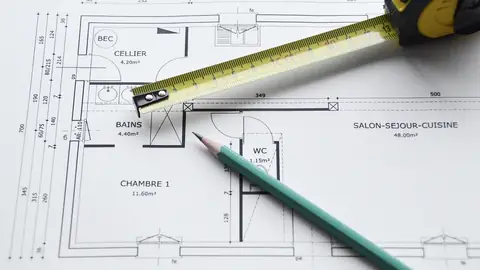
A simple sketch of each floor, marked with doors, windows, and the outside meeting spot, is enough. Our guide to building a home escape plan with two ways out explains how to run the drill so children and guests remember it.
- Two ways out of every sleeping room
- Escape ladder for second-floor and loft bedrooms
- Practice deployment once, unhurried, in daylight
- Meeting place outside, visible from the street
Heating, Electrical, and the Mountain Factors
Wood stoves, pellet stoves, and chimneys are leading ignition sources in mountain homes. Keep combustibles at least 3 feet from the stove on all sides, use a screen or closed door, and have the chimney swept and inspected annually, more often with heavy use or green wood. Creosote buildup is cumulative and invisible from the room.
Electrical load deserves attention in older cabins. Space heaters should plug directly into a wall outlet, never a power strip or extension cord, and should be kept 3 feet from bedding and curtains with an automatic tip-over shutoff. Avoid daisy-chained extension cords, and have an electrician look at panels that trip repeatedly or show scorch marks.
Seasonal vacancy changes the risk profile. A cabin empty for weeks can smolder unnoticed until someone arrives. Consider monitored alarms or a neighbor check, shut off the water and unplug non-essential appliances when leaving, and never leave a space heater or stove running unattended in an empty building.
For the ignition patterns we see most often, including dryer lint, chimney creosote, and overloaded circuits, read common causes of house fires in mountain communities.
The Maintenance Calendar That Keeps It All Working
Equipment fails quietly. A detector chirps once and is silenced; an extinguisher gauge drifts below green; a ladder sits unused for five years and the rungs stiffen. A short, dated routine prevents nearly all of it, and it takes less time per year than one afternoon of yard work.
Monthly: press the test button on every alarm, glance at each extinguisher gauge, and confirm escape routes are still clear. Twice a year, at daylight-saving changes if that helps you remember, replace batteries in any alarm that uses replaceable cells, vacuum detector vents, and run a household escape drill.
Annually: sweep the chimney, have gas appliances and the furnace serviced, check extinguisher service tags, and inspect escape ladders for corrosion or fraying. Every 10 years, replace smoke alarms entirely, since sensors degrade even when the test button still works.
Replaceable batteries typically last 6 to 12 months depending on alarm type and temperature swings; sealed units last the rated decade. For a fuller schedule, see how often should you replace smoke detector batteries.
- Monthly: test alarms, check gauges, clear exits
- Twice yearly: batteries, vacuuming, escape drill
- Annually: chimney sweep, appliance service, ladder inspection
- Every 10 years: replace smoke alarms
What to Hand Off to a Professional
Some work should not be DIY. Chimney sweeping, gas appliance repair, electrical panel work, and fire sprinkler or suppression system service all require training and, in many jurisdictions, permits and licensed contractors. A homeowner adjusting a gas line or opening a panel to 'just tighten something' is how fires and carbon monoxide incidents start.
If you rent, the owner is generally responsible for providing and maintaining smoke and CO alarms and for extinguisher service in common areas, but tenants should still test alarms and report faults in writing. Keep a dated record of every report; it protects you and gets repairs moving.
Public agencies carry an ethical duty to explain these requirements plainly rather than hide behind code citations. That principle, and what it means for inspections and public education, is the subject of why fire safety ethics matter for public agencies.
When in doubt, call your local fire department's non-emergency line. Many departments will answer questions about alarm placement, extinguisher sizing, or chimney safety, and some offer home safety visits. Save the emergency number in every phone and teach children how to call it.
Budgeting for Basic Protection
Home fire protection is inexpensive relative to almost any other home improvement. A full set of interconnected smoke alarms for a typical three-bedroom home often runs a few hundred dollars installed, and individual battery units cost far less. A 5-pound ABC extinguisher is typically in the range of 40 to 80 dollars, with small kitchen units cheaper still.
Escape ladders for a second-floor window generally cost 40 to 120 dollars depending on length and rating, and a chimney sweep runs roughly 150 to 400 dollars depending on the flue and region. CO alarms sit in the 20 to 60 dollar range. Spread across a decade, the annual cost of working protection is modest.
Prioritize in order: working smoke alarms on every level, a CO alarm if you burn anything, one ABC extinguisher per level, a practiced escape plan, then escape ladders and additional extinguishers. That sequence delivers most of the life-safety benefit before you spend much at all.
| Equipment | Typical cost (USD) | Check or test | Replace or service |
|---|---|---|---|
| Smoke alarm, battery unit | 15–40 | Monthly test | Every 10 years |
| Smoke alarm, interconnected set | 150–400 installed | Monthly test | Every 10 years |
| Carbon monoxide alarm | 20–60 | Monthly test | Per manufacturer, often 5–10 years |
| ABC extinguisher, 5 lb | 40–80 | Monthly gauge check | Service every 6–12 years; replace if discharged |
| Kitchen K-rated extinguisher | 60–120 | Monthly gauge check | Per service tag |
| Escape ladder, two-story | 40–120 | Inspect yearly | Replace if corroded or frayed |
| Chimney sweep and inspection | 150–400 | Annually | Annually with wood heat |
- Working smoke alarms on every level and outside every sleeping area are the highest-value protection you can buy.
- Choose ABC extinguishers for general use, mount them near exits, and check gauges monthly.
- Two ways out of every sleeping room, with a practiced drill, is what turns warning into survival.
- Sweep the chimney annually, service gas appliances, and replace smoke alarms every 10 years.
Karen has spent years writing and editing public safety guidance for mountain communities, with a focus on home fire prevention and clear emergency instructions. She works closely with local fire service information and community records to keep practical advice accurate and easy to follow. Her goal is to help residents prepare before an emergency happens.