Fire Extinguisher Sizes for Kitchens and Garages
By Karen Whitfield · Published · 5 min read
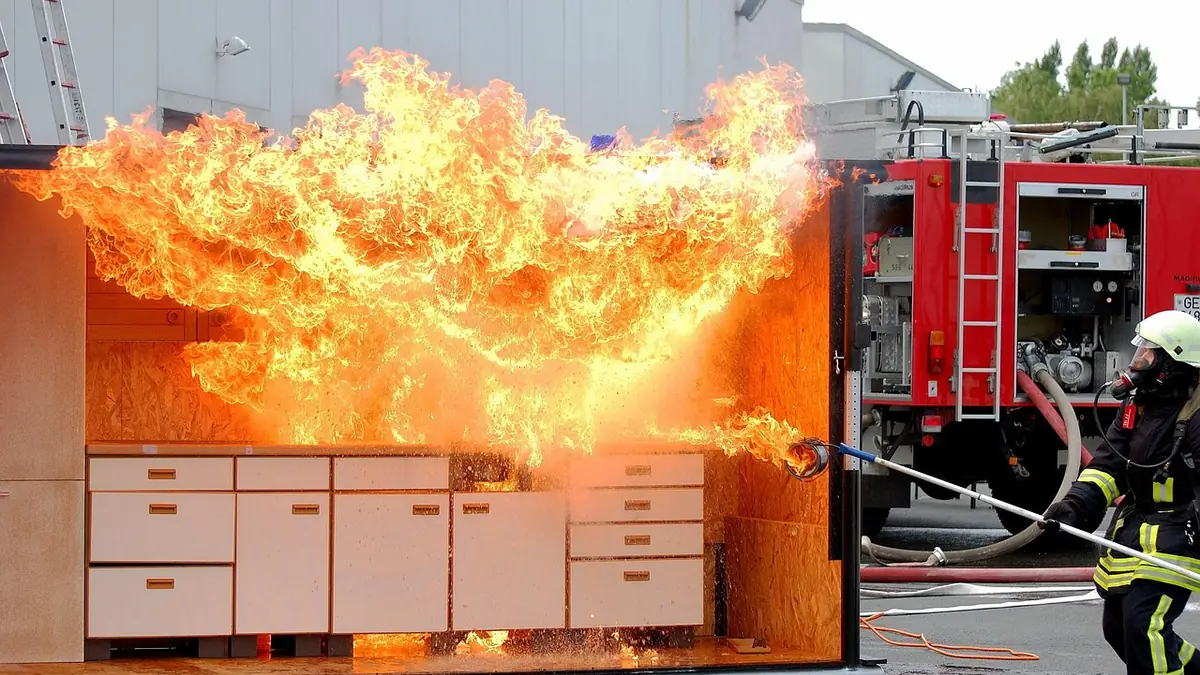
Most home extinguisher mistakes start at the store shelf: a 1-pound aerosol can for a garage full of solvents, or a 10-pound ABC cylinder bolted in a cabinet above the stove where nobody can reach it. Matching the unit to the room matters more than the brand on the label.
This guide covers what the numbers on an extinguisher actually mean — the ABC letters, the numeral rating and the pound weight — and which sizes fit a small kitchen, a two-car garage and a workshop with wood and fuel around.
What the Letters and Numbers Actually Mean
The letters name the class of fire the unit is tested to handle. A is ordinary combustibles like wood, paper and cloth; B is flammable liquids such as grease, gasoline and paint thinner; C means the agent is non-conductive, so it is safe near energized electrical equipment. A household unit rated 2-A:10-B:C handles all three, which is why most homes standardize on ABC dry chemical.
The numerals are comparative ratings, not measurements of fire size in feet. The number before the A reflects how much water-equivalent fire the unit can extinguish in a standard test — a 2-A is roughly twice the capacity of a 1-A. The number before the B reflects square footage of a flammable liquid pan fire. Higher is better, and a 1-A:10-B:C multipurpose unit is the smallest that gives useful protection.
- A: wood, paper, cloth, cardboard
- B: grease, gasoline, solvents, paint
- C: energized wiring and appliances
- K: cooking oils in commercial kitchens
Pound Sizes and How Long They Last
Retail extinguishers come in nominal weights: 1, 2, 2.5, 5, 10 and 20 pounds of agent. The weight is the agent charge, not the total unit, and discharge time scales with it. A 2.5-pound ABC unit typically discharges in 8 to 12 seconds; a 5-pound unit in 13 to 15 seconds; a 10-pound unit in 18 to 22 seconds. That is less time than most people expect.
Discharge range grows with size as well — roughly 6 to 10 feet for small units and 12 to 20 feet for 10- and 20-pound cylinders. In a kitchen, a short range is fine because you are standing close to a stovetop pan. In a garage, reach matters: you want to stand back near the door and still hit a fire near the workbench.
Small aerosol-style units marked 1-A:10-B:C are light and cheap but discharge in about 4 to 6 seconds and should be treated as a supplement, not the only unit in a garage.
- 2.5 lb: 8–12 seconds, 6–10 ft range
- 5 lb: 13–15 seconds, 9–15 ft range
- 10 lb: 18–22 seconds, 12–20 ft range
- 20 lb: 25–30 seconds, 15–20 ft range
Sizing for a Kitchen
A kitchen needs a unit rated for B (grease) and C (appliances) at minimum. A 2.5- or 5-pound ABC is the common choice: heavy enough to matter, light enough that an adult can lift it one-handed and pull the pin without fumbling. Mount it on a wall bracket 3 to 5 feet off the floor, on the path out of the room — never directly over the stove, where a flare-up could block your reach.
If your cooking is heavy on oil — deep frying, cast iron seasoning, turkey fryers — consider a 5-pound ABC as the primary and keep a lid and a box of baking soda within arm's reach. Dry chemical makes a mess in a kitchen, but it works. A small 1-pound aerosol unit stored under the sink is better than nothing but should not be the only extinguisher in the house.
Any kitchen unit should be checked monthly for pressure and pin placement, and shaken or serviced per the label; dry chemical settles and cakes if left undisturbed for years. A short inspection routine takes under a minute per unit — see our homeowner inspection checklist.
- 2.5–5 lb ABC minimum
- Mount 3–5 ft high, near the exit
- Keep a lid and baking soda for pan fires
- Never store over the stove
Sizing for a Garage or Workshop
Garages concentrate hazards: gasoline cans, paint thinner, propane cylinders, sawdust, lithium batteries and charging tools. Flammable liquid fires spread fast and produce a lot of heat, so the B rating matters more here than anywhere else in the house. A 5-pound unit at 3-A:40-B:C or better is a sensible floor for a one- or two-car garage; a 10-pound unit is better if you store fuel, do welding or keep a project car.
Place the unit near the door you use most, not beside the fuel shelf. If a fire starts at the workbench, you want to grab the extinguisher on your way in — or out — without walking past the flames. Add a second unit near the bench if the garage is deep or has a separate shop area. In a detached garage, keep the unit off the concrete floor and above freezing temperatures, since some agents and propellants are affected by cold.
Wood stoves and chimneys are a separate risk from liquid fuels; our pre-winter chimney checks cover that side of shop heating.
- 5 lb ABC minimum, 3-A:40-B:C or higher
- 10 lb if you store fuel or weld
- Mount near the main door
- Keep above freezing in detached shops
| Nominal size | Typical rating | Discharge time | Range | Best room |
|---|---|---|---|---|
| 1 lb (aerosol) | 1-A:10-B:C | 4–6 sec | 4–6 ft | Supplement only |
| 2.5 lb | 1-A:10-B:C | 8–12 sec | 6–10 ft | Small kitchen |
| 5 lb | 3-A:40-B:C | 13–15 sec | 9–15 ft | Kitchen / garage |
| 10 lb | 4-A:60-B:C | 18–22 sec | 12–20 ft | Workshop / fuel storage |
| 20 lb | 10-A:120-B:C | 25–30 sec | 15–20 ft | Large shop or barn |
Weight, Reach and Who Has to Lift It
A 10-pound ABC cylinder weighs roughly 16 to 18 pounds fully charged; a 20-pound unit weighs about 30 pounds. That is a lot to grab, aim and hold steady while a fire is growing. Choose the largest unit every adult in the household can lift and control with one hand on the handle and the other on the hose — often that is a 5-pound unit, not a 10.
Height and strength vary, so test the unit before you commit: pick it up in the store, pull the safety pin with your thumb as you would in an emergency, and check that the hose reaches where you would aim. A lighter unit that gets used beats a heavy one that stays on the wall. If you have a two-story home, one extinguisher per floor is more useful than one oversized cylinder in the basement.
Practice the motion once or twice a year. The four-step routine is short, but it needs to be automatic under stress — see how to use a fire extinguisher in four steps.
- 10 lb unit weighs about 16–18 lb charged
- 20 lb unit weighs about 30 lb
- One unit per floor beats one oversized unit
- Test the pin and grip before buying
What to Skip and What to Pair It With
Skip decorative or unlabeled units, vintage brass extinguishers and anything without a current service tag or pressure gauge in the green. Skip CO2 units as a sole home choice — they are excellent for electronics but have no A rating, so a wood or paper fire will re-ignite. Water and foam units are not suitable near energized panels.
No extinguisher replaces early warning. Working smoke alarms on every level and outside sleeping areas give you the minutes that make an extinguisher useful at all. Inside cabins and A-frames, placement of those alarms takes some thought — see our cabin and A-frame placement rules and what each alarm type catches.
Finally, decide in advance when to leave. If the fire is taller than you, spreading across a wall or ceiling, or producing heavy smoke, get everyone out and call for help. Extinguishers are for small, contained fires with a clear exit behind you.
- No gauge or tag: leave it
- CO2 alone: no A rating
- Water/foam: not near live panels
- Leave if the fire is above shoulder height
- Match the unit to the room: 2.5–5 lb ABC in the kitchen, 5–10 lb ABC in the garage.
- Read the numerals, not the weight: 3-A:40-B:C beats a bigger cylinder with a weaker rating.
- You get 8–22 seconds of discharge from most home units — plan to leave, not to fight a large fire.
- Mount near the exit, check the gauge monthly, and keep alarms working as the first line of defense.
Karen has spent years writing and editing public safety guidance for mountain communities, with a focus on home fire prevention and clear emergency instructions. She works closely with local fire service information and community records to keep practical advice accurate and easy to follow. Her goal is to help residents prepare before an emergency happens.