Fire Extinguisher Inspection Checklist for Homeowners
By Karen Whitfield · Published · 5 min read
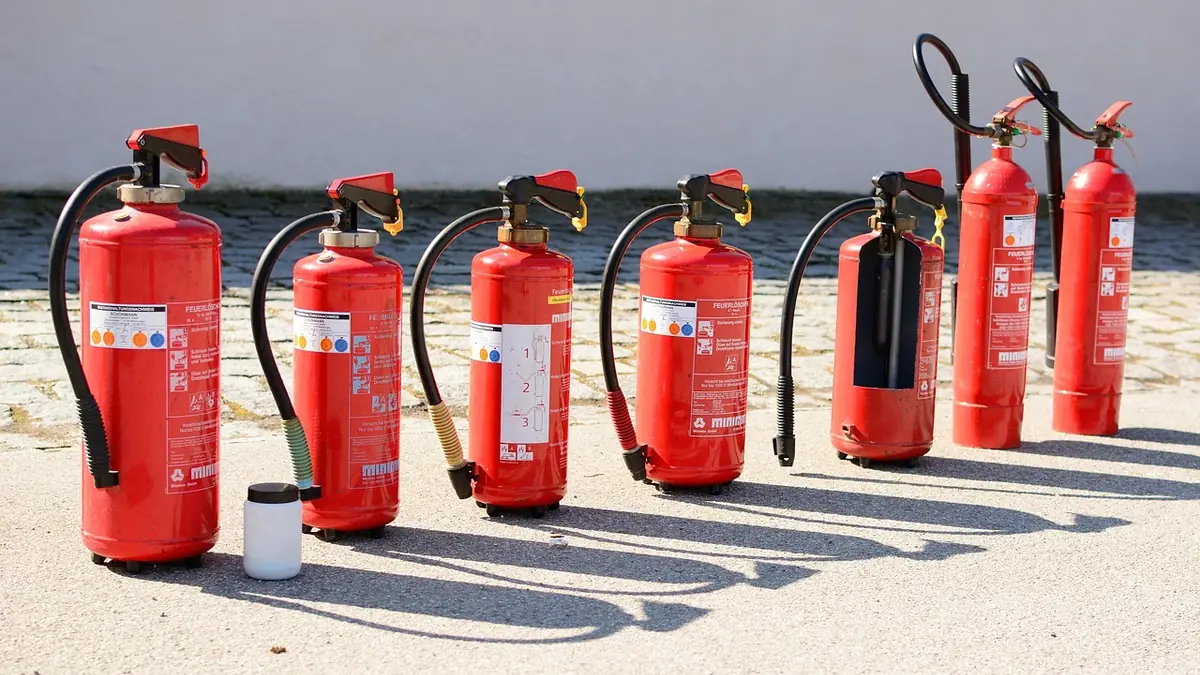
A fire extinguisher that has sat in the same corner for three years is not a safety device until you have looked at it. Pressure bleeds off, safety pins work loose, powder compacts, and plastic parts crack in cold garages. A two-minute monthly look catches nearly all of these problems before you need the extinguisher.
This checklist walks through what to check each month, what to do once a year, and how mountain conditions such as freezing nights and dry summer air change the picture. The goal is simple: when you reach for the extinguisher, it should be charged, sealed, and within its service life.
Start With the Gauge and the Pin
The pressure gauge is the fastest diagnostic you have. On a standard stored-pressure dry chemical unit, the needle should sit inside the green band, usually between roughly 100 and 195 psi depending on the model. A needle resting in the red means the unit has lost pressure and will not discharge properly — retire it rather than hoping it recovers.
Next, look at the safety pin and the tamper seal. The pin should pass through the handle levers with the plastic or wire seal intact. A missing seal is a warning sign: someone may have squeezed the handles, or the pin vibrated loose during transport. If the pin is gone or the seal is broken, treat the extinguisher as used and replace it.
Finally, check the nozzle and hose. Dry chemical can cake in the nozzle opening, especially after a season in an unheated cabin. Wipe the nozzle, flex the hose to confirm it is not cracked or stiff, and make sure nothing is blocking the outlet.
- Needle in the green band, not red or white
- Safety pin present and tamper seal unbroken
- Nozzle clear, hose flexible and free of cracks
- No dents, rust bubbles, or corrosion on the cylinder
The Monthly Two-Minute Walkthrough
Pick a fixed day — the first of the month works well — and inspect every extinguisher in the house. Lift each one to confirm it still has weight; a unit that feels suspiciously light may have leaked through a loose valve. Check that the mounting bracket holds the cylinder firmly and that nothing is stacked in front of it.
Look at the label and confirm it is still readable. Over time, labels fade and instructions become impossible to follow in a panic. If the label is gone, replace the unit. Also confirm the extinguisher is rated for the fire class it might face: an A-B-C dry chemical unit covers most household risks, while a Class K unit belongs in the kitchen near the stove.
Log the date and the gauge reading on a card taped inside a cabinet door. A written record makes it obvious when a unit has slowly drifted toward the red, and it gives you a defensible answer if an insurance adjuster or inspector asks about maintenance.
- Lift and feel for weight loss
- Confirm bracket is secure and access is clear
- Read the label and class rating
- Record date and gauge status
Powder Settling and the Annual Shake
Dry chemical powder settles and compacts when an extinguisher sits undisturbed. In a stored-pressure unit, that means the first seconds of discharge may be weak or sputter. The standard remedy is simple: once a year, turn the extinguisher upside down and shake it firmly for a few seconds, or tap the base with the heel of your hand to break up the powder.
Do not shake a carbon dioxide extinguisher — it holds liquid CO2 under pressure and has no powder to loosen. CO2 units are checked by weight instead: compare the current weight against the stamped full weight; a loss of more than about 10 percent means it has leaked and should be replaced or refilled.
If your extinguisher has a flexible hose, flex it fully during the annual check and inspect the crimp where the hose meets the valve. That joint is a common failure point on older units and is easy to miss during a quick monthly glance.
- Invert and shake dry chemical units once a year
- Never shake CO2 extinguishers; weigh them instead
- Flex the hose and inspect the crimp joint
- Note any powder residue around the valve as a leak sign
Annual Checks and Service Intervals
Manufacturers typically call for a professional maintenance check every 12 months for extinguishers in commercial use and every six years for a full internal examination of stored-pressure dry chemical units. For a home, a reasonable approach is an annual self-inspection plus a professional service at the six-year mark, or sooner if the unit shows any defect.
Most disposable homeowner extinguishers are not designed to be recharged. Their service life is generally listed as 10 to 12 years from the date of manufacture stamped on the neck or base. When the unit reaches that age, or fails any check, replace it rather than refilling it.
Keep the receipt and the manufacture date in your records. If you have several units, stagger their purchase so you are not replacing four extinguishers in the same month.
- Annual self-inspection with a written log
- Professional internal exam around year six
- Replace disposables at 10–12 years
- Stagger purchases to spread replacement cost
Mountain Conditions That Shorten Extinguisher Life
Mountain homes put extinguishers through more than a suburban house does. Garage units see hard freezes in winter and can crack plastic valve components. Cabins that sit empty for months accumulate dust in nozzles and allow powder to settle into a solid block. Summer heat in an unventilated shed can push a gauge into the red.
Cold is the bigger risk. A dry chemical extinguisher stored below freezing for extended periods may not discharge at full force because the propellant gas contracts. If your garage routinely drops below about 20°F, move the extinguisher indoors or choose a location that stays above freezing.
Wildfire season adds another dimension. Keep at least one extinguisher near the entry you would use to evacuate, not buried in a closet. If you have a wood stove or shop, a second unit in that space is worth the cost. Our guide to common causes of house fires in mountain communities pairs well with this checklist.
Where to Place and How Many to Keep
Placement matters as much as condition. Keep one extinguisher in the kitchen, away from the stove but on the exit path, and one in the garage or workshop. A multi-story home should have at least one unit per floor, with the primary bedroom level included. Travel distance from any point to the nearest extinguisher should stay under roughly 30 to 40 feet.
Mount units at a height where an adult can grab the handle without reaching overhead — typically 3 to 5 feet from the floor to the bottom of the cylinder. Never store an extinguisher behind furniture, under a sink full of cleaning products, or in a cabinet a child can open easily.
If you are sorting out detector coverage at the same time, our article on smoke detectors versus carbon monoxide alarms explains which device catches which hazard. Extinguishers and alarms work as a system: alarms give you time, extinguishers give you an option.
- One in the kitchen, on the exit path
- One in the garage or workshop
- At least one per floor in multi-story homes
- Mount 3–5 feet from floor, unobstructed
| Check | Frequency | What to Look For | Action if Failed |
|---|---|---|---|
| Gauge and pin | Monthly | Needle in green band; seal unbroken | Replace unit |
| Weight and bracket | Monthly | No unexpected lightness; secure mount | Remount or replace |
| Powder shake | Annually | Powder moves freely inside cylinder | Shake; replace if still solid |
| Hose and nozzle | Annually | Flexible hose, clear nozzle | Replace hose or unit |
| Professional service | Every 6 years | Internal exam, valve condition | Service or replace |
| Age limit | 10–12 years | Manufacture date stamp | Replace disposable unit |
- Check the gauge, pin, and seal every month — two minutes prevents most failures.
- Shake dry chemical extinguishers once a year to break up settled powder.
- Replace disposable units at 10–12 years or after any failed check.
- Keep extinguishers above freezing and on the exit path, not in a closet.
Karen has spent years writing and editing public safety guidance for mountain communities, with a focus on home fire prevention and clear emergency instructions. She works closely with local fire service information and community records to keep practical advice accurate and easy to follow. Her goal is to help residents prepare before an emergency happens.