How to Extinguish a Fire: Extinguisher Basics
By Karen Whitfield · Published · 4 min read
Most home fires that get put out by a resident are caught in the first minute or two, while the flames are still small and contained. That narrow window is what portable extinguishers are built for. They are not built to fight a fire that has spread to cabinets, ceilings, or walls.
This guide covers the practical steps: choosing the right extinguisher for your home, the four-step technique, how to decide in seconds whether to fight or leave, and how Mammoth Lakes conditions—dry air, wood heat, and slow winter response on some roads—change the math.
Decide in Seconds: Fight or Evacuate
Before you touch an extinguisher, answer three questions. Is the fire smaller than a wastebasket? Is it confined to one object, not spreading across a wall or into a cabinet? Is the room still passable, with smoke not banking down to head height? If any answer is no, close the door and leave. Fire doubles in size roughly every minute in a typical furnished room, so hesitation costs more than a ruined kitchen.
You also need a clear exit behind you. Never let a fire sit between you and your way out. If you must turn your back on flames to reach a door, do not engage. And never fight a fire alone in a remote home—have someone call 911 and stand outside to direct responders, especially on mountain roads where driveways can be hard to find in the dark or snow.
- Fire is bigger than a small trash can
- Flames are spreading beyond one object
- Smoke is filling the room or dropping to head height
- Your exit is behind the fire or blocked
- No one else is available to call 911
Pick the Right Extinguisher
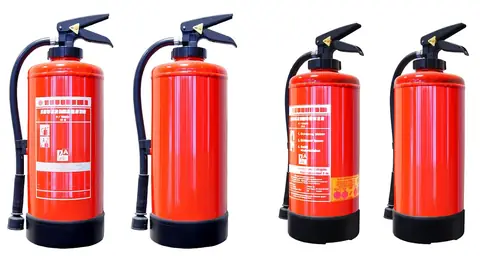
For a home, a multi-purpose dry chemical extinguisher rated 2-A:10-B:C or larger covers the common fuels: wood, paper, cloth, flammable liquids, and energized electrical equipment. A 5-pound unit discharges in roughly 8 to 15 seconds; a 10-pound unit gives you maybe 15 to 25 seconds. That is not much, which is why aim and technique matter more than size alone.
Avoid water-can extinguishers for anything electrical or involving grease. In mountain homes with wood stoves and propane, a dry chemical unit near the kitchen and another near the stove or garage covers most realistic scenarios. Check the gauge monthly and shake dry chemical units a few times a year so the powder does not cake. Our Fire Extinguisher Inspection Checklist for Homeowners walks through the monthly check in detail.
The Four-Step Technique (PASS)
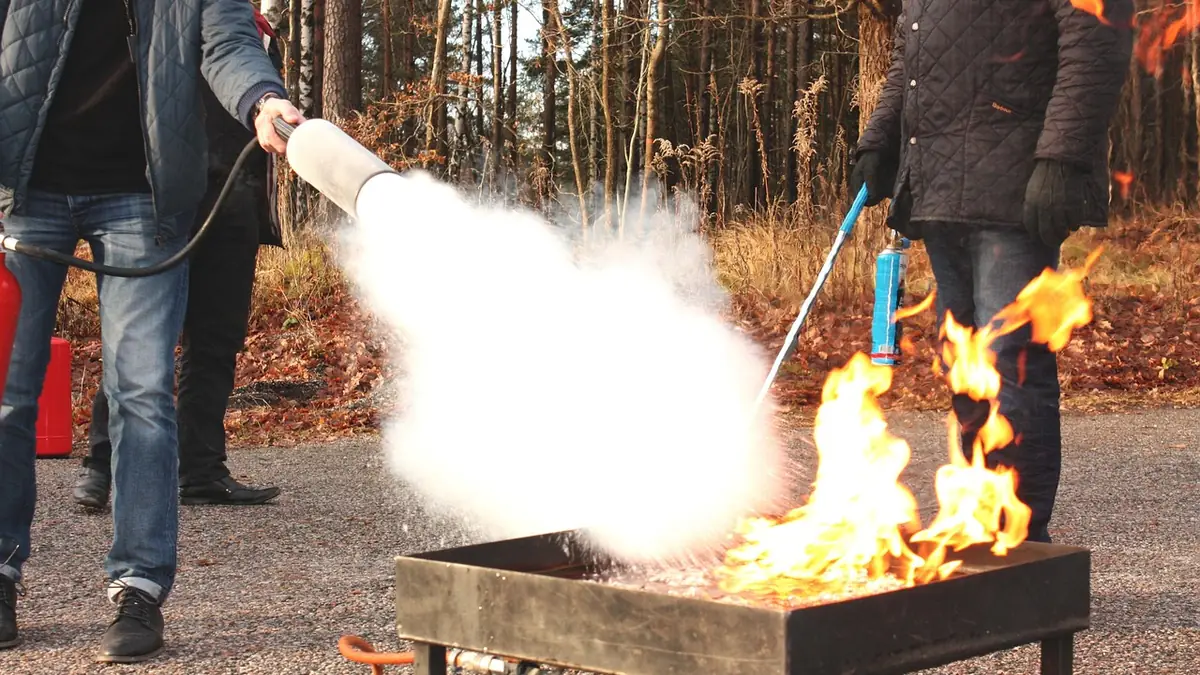
Pull the pin, aim low at the base of the flames, squeeze the handle, and sweep side to side. Stand 6 to 8 feet back—closer than many people expect—and back away as the fire knocks down, keeping the nozzle pointed at the hot spots. Short bursts conserve agent; a full continuous discharge often empties the can before the fire is out.
Wind is the enemy outdoors. Work with the wind at your back and the fire ahead of you, and never approach a fire uphill or from below a slope. If the extinguisher runs out and the fire is still burning, leave immediately—do not search for a second unit. The step-by-step version, with distances and sweep patterns, is in How to Use a Fire Extinguisher in Four Steps.
- Pull the pin and test the handle
- Aim at the base of the flames, not the tips
- Squeeze slowly and steadily
- Sweep side to side across the fire's width
- Back away as the fire goes out
Grease and Electrical Fires Need Different Moves
A pan of burning oil is not an extinguisher job in most homes—it is a lid job. Slide a metal lid over the pan, turn off the burner, and leave it covered until it is cold. Never carry a burning pan outside; moving it spreads fire and causes burns. Baking soda in volume can smother a small pan fire, but flour and water make it worse.
For electrical fires, shut off power at the breaker or unplug the device if you can reach it safely, then use a C-rated extinguisher. If the fire is inside a wall, appliance cabinet, or outlet box, treat it as beyond extinguisher range and evacuate. These fires often travel inside walls and reignite hours later, so call 911 even if the visible flames stop.
Mountain Conditions Change the Math
Mammoth Lakes homes sit in dry fuels with winter access that can slow response. A fire that starts on a deck, in a woodpile, or in dry brush can move into the structure faster than in wetter climates, so outdoor extinguishing should only happen when the fire is small, the wind is calm, and your escape route is clear. Embers carried by wind are a real risk; wet down the area afterward and watch for at least 30 minutes.
Wood stoves and chimneys are a common ignition source in cold months, and a chimney fire is never an extinguisher job. Close the stove door and air intake, get everyone out, and call 911; chimney fires can spread into the roof structure invisibly. The broader pattern of ignition sources here is covered in Common Causes of House Fires in Mountain Communities.
What to Do After the Flames Are Out
Even a fire you put out yourself needs a call to the fire department. Smoldering material can sit in insulation, wall cavities, or furniture stuffing for hours and flare up after you go to bed. Get out, call 911, and let responders check for hidden heat with thermal tools. Do not reoccupy the room until they clear it.
Replace any extinguisher that was discharged, even partially, and have a serviceable unit refilled or swapped. If the fire was caused by a stove, wiring, or chimney problem, do not use that equipment again until it is inspected. This is also a good moment to confirm your alarms work—see How Many Smoke Detectors Does a Typical Mammoth Lakes Home Need? and our battery replacement schedule.
Training and Local Resources
Reading about PASS is not the same as doing it. Ask your local fire department about hands-on extinguisher training; many departments run short sessions where you discharge a unit on a controlled pan fire. Practicing once means you will not be learning the pin, the handle, and the distance for the first time in a smoke-filled kitchen.
If you live in a neighborhood with a homeowner association, fire department commissioners often review access, hydrants, and defensible space issues that affect response times. Learning how those meetings work is a practical way to raise concerns about your street or subdivision: How Fire Department Commissioners and Meetings Work.
| Class | Fuel Type | Typical Home Location | Works On |
|---|---|---|---|
| A | Wood, paper, cloth, trash | Living areas, garage | Ordinary combustibles |
| B | Gasoline, propane, grease, solvents | Kitchen, garage, shop | Flammable liquids |
| C | Energized electrical equipment | Near panel, office, kitchen | Electrical fires |
| A-B-C | All of the above | Kitchen and garage (recommended) | Most household fires |
| K | Cooking oils and fats | Kitchen (commercial-grade) | Grease fires |
- Fight only small, contained fires with a clear exit behind you; otherwise evacuate and call 911.
- Use PASS—pull, aim at the base, squeeze, sweep—from 6 to 8 feet back.
- Grease fires: cover with a metal lid and turn off the heat; never carry a burning pan.
- Call the fire department even after a successful knockdown, and replace any discharged extinguisher.
Karen has spent years writing and editing public safety guidance for mountain communities, with a focus on home fire prevention and clear emergency instructions. She works closely with local fire service information and community records to keep practical advice accurate and easy to follow. Her goal is to help residents prepare before an emergency happens.