Fire Safety Notes From April 2021: What Still Applies
By Karen Whitfield · Published · 6 min read
April in Mammoth Lakes is a shoulder month. Snow is still melting off north-facing roofs while the first dry grass appears on south slopes, and that combination is exactly when small outdoor fires get away from people. The notes we shared with residents in April 2021 covered defensible space, burn permits, extinguisher checks and smoke alarm batteries, and nearly all of it still holds up.
This entry revisits those seasonal reminders with the numbers and timing that matter at 8,000 feet. Treat it as a spring checklist rather than a historical curiosity. Conditions change week to week here, so confirm current restrictions with the fire district before you burn, mow or clear.
Why April Is a High-Risk Month Here
Mammoth Lakes sits in a mountain basin where spring arrives unevenly. A south-facing lot at 7,800 feet may be bare and windy by the first week of April, while a lot two streets over still holds a foot of rotten snow. Dry grass, needle litter and exposed brush cure quickly in the afternoon sun and wind, and they ignite far more readily than most people expect in April.
The other factor is human activity. Residents come up for spring break, contractors start roof and deck work, and people clean up winter debris. That means more equipment outdoors, more debris piles and more chances for a spark to land where fuels are cured. Historically, a large share of spring starts in mountain communities come from equipment use and debris burning rather than lightning.
Wind is the multiplier. Afternoon gusts in the Eastern Sierra routinely push 20 to 40 mph through exposed neighborhoods, and a fire that would be a nuisance on a calm morning can reach adjacent roofs in minutes. That is why the district treats April as an active fire season month, not a pre-season warm-up.
- Check the current burn status before any open flame
- Clear needles from roof valleys and under decks first
- Keep equipment use to calm mornings when possible
Defensible Space: The First 5 to 30 Feet
The zone within roughly 5 feet of the structure is the one that decides whether a wind-driven ember shower ignites the building. In practice that means no woodpiles against the wall, no broom or mat of dry needles under the eaves, and no combustible furniture on a deck that cannot be cleared quickly. Embers, not flame fronts, destroy most homes in wildland fires, and they collect exactly in those corners.
From 5 to 30 feet, the goal is lean, clean and green in practical terms: low grasses, spaced shrubs, no ladder fuels that carry fire from ground into tree crowns. In Mammoth Lakes, keep in mind that mature lodgepole and Jeffrey pine need generous spacing and pruning of lower limbs, typically the lowest 6 to 10 feet of branches on larger trees near structures.
April is a good month to do this work because soils are still moist and temperatures are moderate, which makes hand tools and chainsaw work safer. Pile cut material rather than broadcasting it, and check whether chipping or green-waste drop-off is available before you create piles that sit all summer.
| Task | Typical frequency | Best window in Mammoth Lakes | Common mistake |
|---|---|---|---|
| Roof and gutter needle clearing | 2 times per year | April and October | Skipping roof valleys and under-deck areas |
| Defensible space, 0-30 feet | Annually, touch up seasonally | April to June | Clearing brush but leaving woodpiles at the wall |
| Smoke alarm test | Monthly | Any month, all year | Testing but not vacuuming dust from vents |
| Extinguisher gauge and seal check | Monthly visual | Spring reset in April | Ignoring cracked hoses and missing pins |
| Extinguisher professional service | Every 6 years | Before summer | Assuming a green gauge means fully serviced |
| Open burning | Only with a current permit | Calm mornings, permit required | Burning trash or treated wood |
Open Burning and Burn Permits
Residential burning of dry vegetation is regulated, and the rules change with weather. A permit is generally required, it is generally valid only for a defined period, and it can be suspended entirely on short notice when winds pick up or staffing is committed elsewhere. Never assume that a permit issued in March authorizes burning in mid-April.
Practical requirements are consistent across most mountain districts: burn only dry vegetation, never household trash, lumber or treated wood; keep piles small and manageable; have water, a shovel and a clear line around the pile; and stay with the fire until it is fully out. Many agencies require a minimum distance from structures and property lines, often in the 25 to 50 foot range, and a phone check before ignition.
Smoke complaints are taken seriously, and burn days are frequently restricted for air quality as well as fire risk. If you are unsure, call the district non-emergency line during business hours rather than guessing. And never burn when a red flag warning or high-wind advisory is in effect.
- Confirm permit validity the same day you burn
- Burn only dry vegetation, never trash or treated wood
- Keep water, shovel and a cleared perimeter on site
- Stay with the fire until it is cold to the touch
Extinguishers and Alarms: Spring Reset
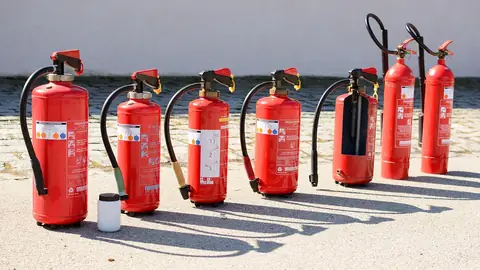
Spring is the right time to reset the safety equipment you stopped thinking about in October. On extinguishers, check the gauge is in the green, the pin and seal are intact, the hose is not cracked, and the label shows a current service date. Most stored-pressure dry chemical units need a professional service every 6 years and hydrostatic testing at 12 years, and disposable units should be replaced rather than serviced.
Size matters more than people expect. A small 2.5-pound unit discharges in roughly 8 to 10 seconds, which is barely enough for a small pan fire if you are already close and have a clear exit. Kitchens and garages benefit from a 5-pound ABC unit as a practical minimum, and larger garages with fuel or vehicles often warrant a 10-pound unit. Our guidance on choosing an extinguisher size for a kitchen or garage walks through the trade-offs between weight and discharge time.
For smoke alarms, the working rule is one on every level, one in each sleeping area and one outside each sleeping room, interconnected so they all sound together. Test monthly, vacuum the vents, and replace alkaline batteries at least annually. Sealed 10-year units should be replaced at the end of their rated life. If you are unsure how many your floor plan needs, see how many smoke detectors a typical Mammoth Lakes home needs.
A quick written record makes spring checks repeatable. Our fire extinguisher inspection checklist for homeowners covers the monthly visual steps, and the district's historical records, described in understanding fire department history and records, show how often small equipment failures have contributed to larger losses locally.
Evacuation Readiness Before Summer
April is the least stressful month to sort out evacuation logistics, because you are not doing it with smoke in the air. Confirm your address is clearly visible from the road, know at least two routes out of your neighborhood, and decide in advance where household members will meet and who collects pets, medications and documents. Cell service in the basin is uneven, so agree on a plan that does not depend on a call getting through.
Register for local emergency alerts if you have not already, and keep a printed list of contacts in the vehicle. Build a small go-bag now: medications, chargers, spare glasses, copies of insurance and identification, water, and a flashlight. Vehicle fuel above half a tank is a simple habit that removes one more decision during an evacuation.
Talk through the plan with everyone in the household, including visitors and renters. In a mountain community with a large seasonal population, the person who knows the second exit route is often the one who keeps a group calm.
- Post house numbers visibly at the street
- Identify two exit routes from your neighborhood
- Keep fuel above half a tank during fire season
- Store copies of key documents off-site or digitally
Community Contacts and When to Call
Call 911 for any fire, smoke showing, or life-safety emergency. For permits, inspections, defensible-space questions and burn-status checks, use the district's non-emergency line during business hours. Keeping non-emergency calls off the emergency line matters in a small department where the same crew may be responding to a call.
Public meetings are where burn rules, fees and seasonal restrictions get set, and residents can attend. If you want to understand how those decisions are made, our explainer on how fire department commissioners and meetings work is a useful primer, and the broader question of why transparent process matters is covered in why fire safety ethics matter for public agencies.
Report hazards you notice: overgrown vacant lots, blocked hydrants, illegal burning. A short call with an address is usually enough, and it is one of the cheapest ways to reduce risk in a neighborhood.
- April is an active fire month here: cured grass, wind and spring cleanup equipment all raise risk.
- Clear the first 5 feet around the structure first; embers, not flame fronts, ignite most homes.
- Confirm burn permits the same day and never burn in wind or during a red flag warning.
- Reset alarms and extinguishers in spring: test monthly, service extinguishers every 6 years.
Karen has spent years writing and editing public safety guidance for mountain communities, with a focus on home fire prevention and clear emergency instructions. She works closely with local fire service information and community records to keep practical advice accurate and easy to follow. Her goal is to help residents prepare before an emergency happens.